



Setting Up Your Inflatable Rental Business: Guide
Starting an inflatable rental business is an exciting venture with high growth potential. While the "low overhead" model is appealing, success lies in the details of your preparation. Use this guide to ensure you’ve covered every base before your first booking.
1. Managing Overhead & Operations
Despite the low entry cost, certain operational essentials are non-negotiable for a smooth start.
-
Transportation: You don’t need a semi-truck. A standard pickup, SUV, or small trailer works perfectly.
-
Capacity Tip: A truck typically fits 5–6 units, while an SUV handles about 3.
-
-
Staffing: One person can typically set up a unit in 10 minutes and pack it up in 15. If hiring help, expect to pay $45–$70 per delivery.
-
Pro Tip: Always use a Driver Contractor Agreement to clearly define liability and expectations.
-
-
Storage: Inflatables are surprisingly compact when rolled. A single unit occupies roughly a 2x2 foot space. A standard garage or shed can easily house a fleet of 25 units.
-
Essential Gear: Budget approximately $650 for a startup kit, including:
-
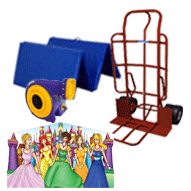
Heavy-duty hand truck (with fenders)
-
Sandbags and stakes for securing units
-
Small vacuum, cleaning solution, and microfiber rags
-
Basic toolkit (hammer, level, etc.)
-
2. Strategic Marketing
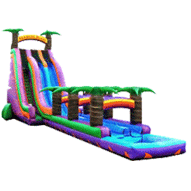
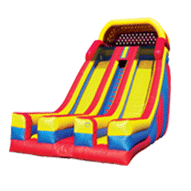
Your best advertisement is the product itself. When a giant, colorful slide is in a front yard, the neighborhood takes notice.
-
The Essentials: Secure a professional logo, a functional website, and business cards.
-
On-Site Branding: Ensure your company name and phone number are prominently displayed on the front of every unit.
-
Referral Power: In this industry, 60–70% of business comes from word-of-mouth. Providing a professional, "on-time" experience is your most effective marketing tactic.
3. Insurance & Legal Protection
Safety is paramount. You cannot operate professionally without the following three pillars:
-
Liability Insurance: Vital for protecting your assets. Most venues (parks, schools) require a $1,000,000 minimum policy. Expect premiums to cost roughly 5% of your total revenue.
-
Worker’s Comp: Necessary if you have employees or contractors.
-
Property Insurance: Covers damage to your inventory from theft or weather.
Preparation Checklist for Insurance Quotes:
-
Inventory list with dimensions and purchase dates.
-
Proof of employee safety training and maintenance logs.
-
Photos of safety rules clearly displayed on your units.
-
Owner’s manuals and installation guides for each model.
4. Inventory Selection: New vs. Used
Choosing your first "fleet" is a balance of budget and longevity.
|
Feature |
New Units |
Used Units |
|
Longevity |
5–7 years with care |
Often unknown/shorter |
|
Safety |
Latest standards & manuals |
Potential hidden wear/tear |
|
Warranty |
Full manufacturer warranty |
Usually non-transferable |
|
Initial Cost |
Higher |
Lower |
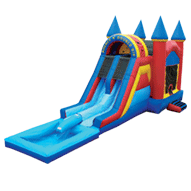
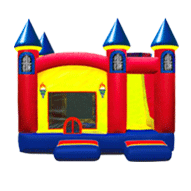
The "Combo" Strategy: For your first purchase, consider a Combo Unit. These include a jump area plus features like slides or basketball hoops. They command $100–$150 more per rental than standard bouncers and appeal to the widest age range (2–9 years).
5. Smart Pricing & Financing
Avoid the "race to the bottom." Under-pricing your units to beat competitors often leads to a cycle where no one makes a profit.
-
Pricing Strategy: Research local rates. If you offer cleaner, newer, and safer units, price yourself slightly higher than the local average. Quality customers will pay for peace of mind.
-
The Full-Day Model: Most pros (80%) rent on a full-day basis (6–7 hours). Avoid half-day rentals; the labor of double delivery usually isn't worth the smaller fee.
-
Financing: Most owners finance their units. A lease-purchase is often 100% tax-deductible.
6. Where the Money Is: Rental Opportunities
While backyard birthdays represent 80% of the startup market, growing into the corporate sector is where you scale.
-
Target Markets: Schools, churches, festivals, summer camps, and grand openings.
-
Frequency: Aim for each unit to rent at least 2 times per week. Saturdays and Sundays are your bread and butter, but weekday rentals to daycares can boost your bottom line


